
Introduction
Every website owner wants to appear on the first page of Google. One of the best ways to achieve this goal is by building safe backlinks. If you are searching for how to make safe backlinks, you need to focus on quality instead of quantity. A few links from trusted websites are much more valuable than hundreds of links from low-quality sites.
Google has become smarter over the years. Its algorithm can easily detect spammy or paid links that try to manipulate search rankings. That is why white hat SEO has become more important than ever. Safe backlinks improve your website’s authority, increase organic traffic, and help build long-term trust with search engines.
In this guide, you will learn ethical and practical methods for earning quality backlinks that follow Google’s SEO best practices. These strategies are suitable for beginners, bloggers, business owners, and digital marketers who want sustainable SEO results in 2026.
What Are Safe Backlinks?
Safe backlinks are links from trustworthy and relevant websites that point to your website naturally. These links are earned because your content provides value to readers, not because you paid for them or used manipulative SEO techniques.
For example, imagine you publish a detailed guide about email marketing. If a popular marketing blog links to your article because it helps their readers, that is a safe backlink. Google considers these links as a positive signal of trust.
On the other hand, links from spam websites, link farms, or unrelated directories can harm your website. They may reduce your Google ranking instead of improving it. For More information visit
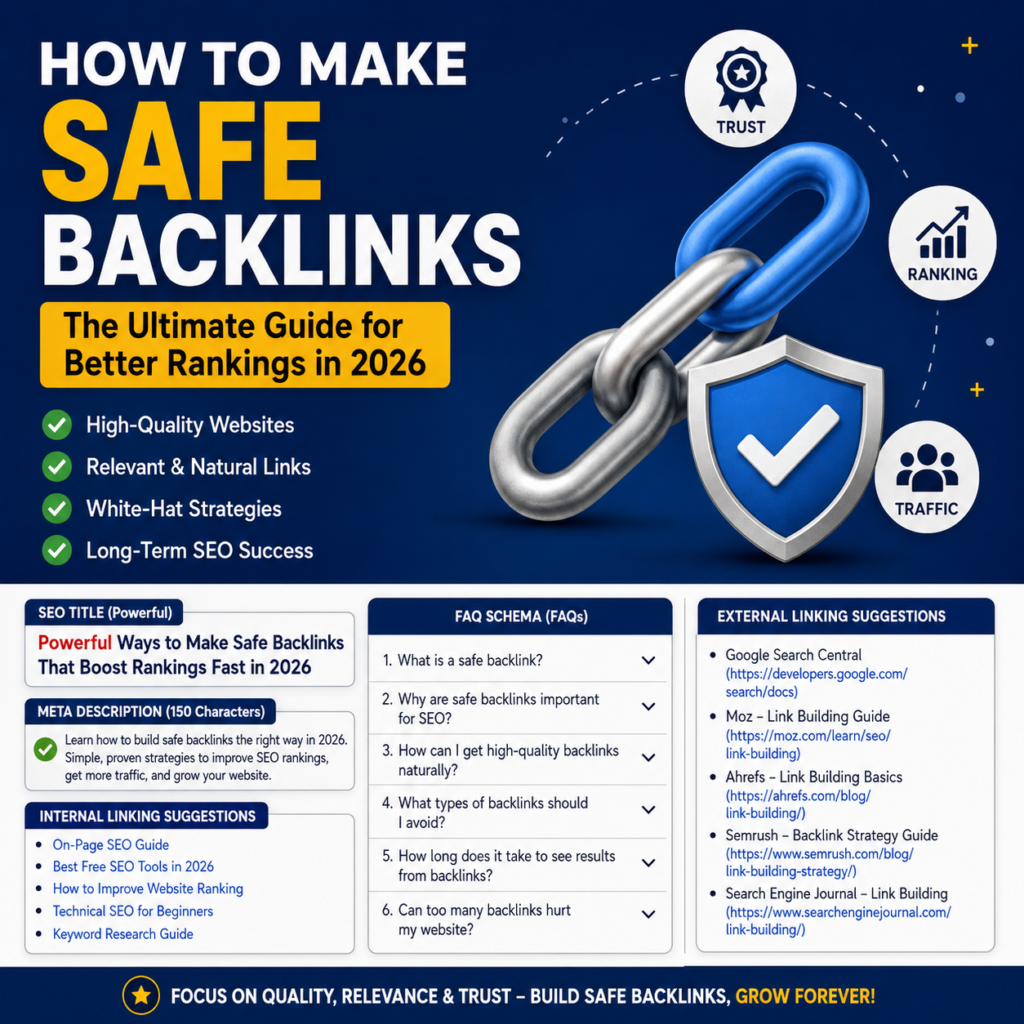
Why Safe Backlinks Matter for SEO
Many people think backlinks are only about increasing rankings. In reality, safe backlinks offer many long-term benefits.
They Build Website Authority
When respected websites recommend your content, search engines consider your website more reliable. This improves your online authority over time.
They Increase Organic Traffic
Visitors can discover your website through backlinks placed on relevant blogs, news sites, or industry resources. These visitors are usually interested in your content, making them more likely to engage with your website.
They Support Long-Term SEO Growth
Safe backlinks follow SEO best practices, so they continue to benefit your website even after future Google algorithm updates.
They Improve Brand Visibility
Every quality backlink introduces your website to a new audience. Over time, this helps build trust and brand recognition in your industry.
How to Make Safe Backlinks Using White Hat SEO
Building backlinks should never feel like a shortcut. Instead, focus on earning links by creating value for others.
1. Publish Content That Solves Real Problems
People naturally link to content that answers questions or solves common problems.
Examples include:
- Step-by-step guides
- Beginner tutorials
- Industry checklists
- Case studies
- Research articles
- Free templates
Instead of writing short articles with basic information, create complete resources that readers will want to save and share.
For example, if your website is about digital marketing, you could publish:
- Complete SEO Checklist for Beginners
- Email Marketing Strategy for Small Businesses
- Google Ads Setup Guide
- Social Media Marketing Calendar
Helpful content becomes a linkable asset that attracts authority backlinks over time.
2. Write Guest Posts for Trusted Websites
Guest posting remains one of the safest methods of natural link building when done correctly.
Choose websites that:
- Publish original content
- Have readers in your niche
- Maintain good editorial standards
- Accept quality guest contributions
Avoid websites that publish hundreds of guest posts every month without reviewing quality.
Write articles that genuinely educate readers instead of promoting your business. A natural backlink inside your author bio or article is usually enough.
3. Create Original Research and Statistics
Original data attracts links because writers and journalists often need reliable sources.
You can create:
- Customer surveys
- Industry reports
- Marketing experiments
- SEO case studies
- Local business research
For example, if you analyze the SEO performance of 100 local businesses and publish the results, other bloggers may cite your research and link back to your article.
This type of link earning creates high-value backlinks without asking anyone for links.
4. Build Relationships Instead of Only Building Links
Many beginners send hundreds of outreach emails asking for backlinks. This approach rarely works.
Instead, build genuine relationships with:
- Bloggers
- Industry experts
- Business owners
- Content creators
- Podcast hosts
Leave thoughtful comments on their articles, share their content, and engage with them on social media. Over time, these relationships often lead to natural backlink opportunities.
Networking creates stronger results than cold outreach alone.
5. Turn Your Content into Different Formats
Different people prefer different types of content.
You can convert one article into:
- Infographics
- Short videos
- LinkedIn posts
- Social media carousels
- Presentation slides
- Downloadable PDFs
Visual content is easier to share and often earns backlinks from websites looking for useful resources.
Coming in Part 2
In the next part, you’ll learn:
- Broken link building
- Resource page outreach
- Editorial backlinks
- Backlink mistakes to avoid
- Safe backlink checklist
- Final conclusion
- SEO title and meta description
- Frequently Asked Questions (FAQs)
This second part will complete the article and bring the total length to approximately 1,000 words.
Now write Part 2
How to Make Safe Backlinks: A Practical Guide to Improve Google Ranking in 2026 (Part 2)
6. Find Broken Links and Offer a Better Resource
Broken link building is one of the safest white hat SEO techniques. Many websites have links that no longer work because the original page was removed or the URL changed.
You can use SEO tools to find broken links on websites related to your niche. If you already have similar content, contact the website owner and politely suggest replacing the broken link with your article.
This strategy benefits both sides. The website owner fixes an error, and you earn a quality backlink from a relevant page.
7. Get Listed on Resource Pages
Many websites have a “Resources” or “Helpful Links” page where they recommend useful websites and guides.
If your content is informative and relevant, you can request to be included on these pages. Before reaching out, make sure your article is well-written, updated, and provides real value.
A backlink from a trusted resource page is an excellent example of authority backlinks that support long-term SEO growth.
8. Promote Your Content Consistently
Publishing great content is only the first step. People need to discover it before they can link to it.
Promote your articles through:
- Social media platforms
- Email newsletters
- Online communities
- Industry forums
- Professional networking platforms
The more people who see your content, the greater the chance of earning natural backlinks.
Remember, promotion is not about asking everyone for a link. It is about increasing visibility so others can decide whether your content deserves a mention.
Backlink Practices You Should Avoid
Some link-building methods may promise quick results, but they can damage your website.
Avoid these practices:
- Buying backlinks from unknown websites.
- Joining link farms or link exchange schemes.
- Using automated backlink software.
- Building links from unrelated websites.
- Creating hundreds of keyword-rich anchor text links.
- Using Private Blog Networks (PBNs) to manipulate rankings.
These methods violate Google’s guidelines and may result in lower rankings or manual penalties. Focus on ethical SEO techniques that provide long-term value instead of temporary gains.
Simple Tips to Build a Strong Backlink Profile
A healthy backlink profile grows naturally over time. Follow these practical tips:
- Publish fresh and helpful content regularly.
- Update older articles with new information.
- Write for people before writing for search engines.
- Earn links from websites within your niche.
- Use natural anchor text instead of repeating the same keyword.
- Monitor your backlinks with SEO tools and remove harmful links if necessary.
- Build trust through consistency and valuable content.
Remember, one backlink from a respected website is often worth more than dozens of links from low-quality websites.
Common Mistakes Beginners Make
Many website owners slow their SEO progress because of avoidable mistakes.
Some common errors include:
- Focusing only on the number of backlinks.
- Ignoring content quality.
- Expecting instant results.
- Sending spam outreach emails.
- Copying competitors without adding unique value.
- Using the same anchor text repeatedly.
Successful link earning takes patience. Search engines reward websites that consistently create useful content and follow SEO best practices.
Conclusion: How to Make Safe Backlinks for Long-Term SEO Success
Learning how to make safe backlinks is one of the best investments you can make for your website. Instead of looking for shortcuts, focus on creating valuable content that people genuinely want to reference and share.
Use white hat SEO, publish original resources, build relationships within your industry, and promote your content wisely. These methods help you earn quality backlinks, improve Google ranking, increase organic traffic, and strengthen your website’s authority.
SEO is a long-term strategy, not a one-time task. By following ethical link-building practices and staying consistent, you can build a strong backlink profile that supports sustainable growth for years to come.
Frequently Asked Questions (FAQs)
1. What are safe backlinks?
Safe backlinks are links from trusted, relevant, and high-quality websites that follow Google’s SEO guidelines and improve your website’s authority.
2. Why are quality backlinks important for SEO?
Quality backlinks help search engines trust your website, improve rankings, increase referral traffic, and build online authority.
3. What is the safest way to build backlinks?
The safest methods include creating valuable content, guest posting on trusted websites, broken link building, resource page outreach, and earning editorial links naturally.
4. Can bad backlinks hurt my website?
Yes. Spammy or low-quality backlinks can reduce your search rankings and may even lead to Google penalties if they violate search guidelines.
5. How long does it take to see results from backlink building?
Most websites begin to notice improvements within a few months. The timeline depends on your competition, content quality, and the authority of the websites linking to you.