
Affordable Campaign Costs
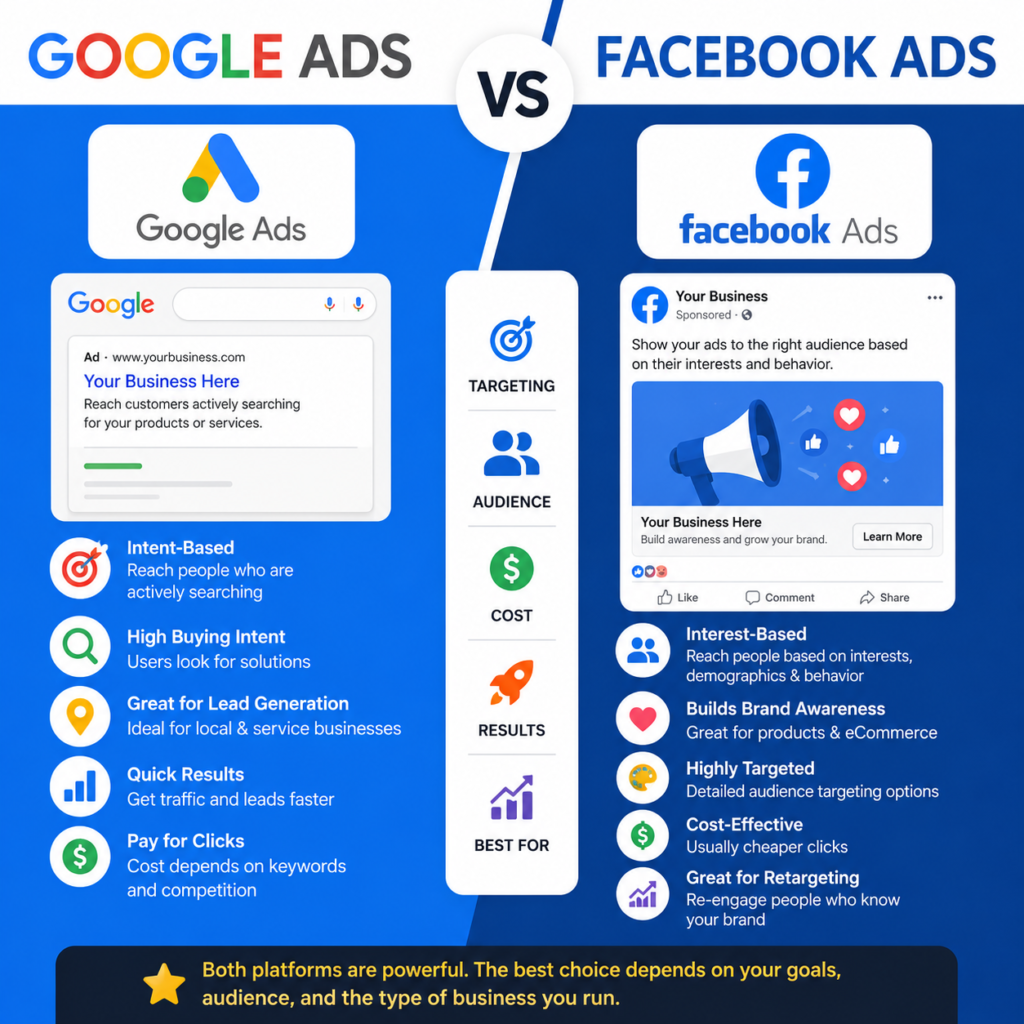
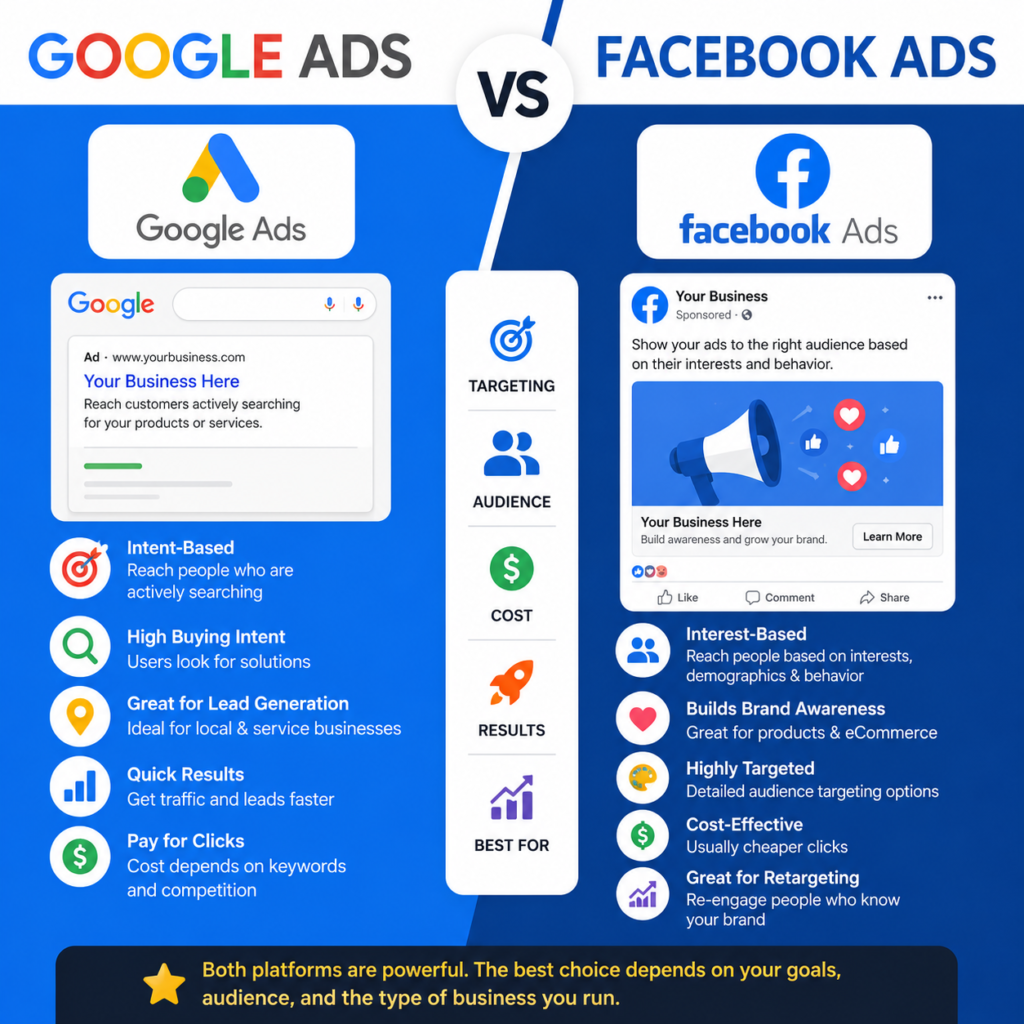
Campaign costs vary on both Google Ads and Facebook Ads platforms. The amount you spend depends on your industry, competition, target audience, and campaign quality
Google Ads Campaign Costs
Google Ads usually costs more because many businesses compete for the same keywords. Popular keywords in industries like insurance, legal services, and real estate often have higher costs per click.
However, a higher cost does not always mean a lower profit. If one customer brings significant revenue, paying more for a click can still produce a strong return.
Facebook Ads Campaign Costs
Facebook Ads often have a lower cost per click in many industries. This allows businesses to reach a large audience without spending a huge budget.
Since Facebook focuses on audience targeting instead of search intent, advertisers often use creative images and videos to attract attention.
If you have a small budget, Facebook Ads can be a good place to start. for more information visit Blog
Audience Targeting Comparison
Choosing the right audience is one of the most important parts of a successful advertising campaign.
Google Ads Targeting for Low cost campaign
Google Ads targets people based on what they search.
You can also target users by:
- Location
- Language
- Device
- Time of day
- Audience segments
- Previous website visitors
This makes Google Ads ideal for reaching customers who already need your product or service.
Facebook Ads Targeting for cost effective Campaigns
Facebook Ads provide detailed audience options.
You can target people by:
- Age
- Gender
- City or country
- Interests
- Occupation
- Education
- Shopping behavior
- Life events
Facebook also lets you create Custom Audiences from your existing customers and Lookalike Audiences to reach people with similar characteristics.
This level of targeting helps businesses reach potential customers before they begin searching.
Which Businesses Should Choose Google Ads?
Google Ads works best for businesses that solve an immediate problem or provide a service people actively search for.
Examples include:
- Digital marketing agencies
- Doctors and clinics
- Lawyers
- Electricians
- Plumbers
- Coaching institutes
- Home repair services
- Travel agencies
When someone needs these services, they often search on Google first.
Which Businesses Should Choose Facebook Ads?
Facebook Ads are well suited for businesses that rely on attractive visuals or impulse buying.
Examples include:
- Clothing brands
- Shoe stores
- Beauty products
- Jewellery
- Furniture
- Home décor
- Fitness products
- Online courses
- Restaurants
- Event promotions
These businesses can capture attention with creative images and videos while people browse social media.
Can Google Ads and Facebook Ads Work Together?
Yes. Many successful businesses use both platforms as part of one marketing strategy.
Here is one example.
A customer sees your Facebook advertisement while scrolling through Instagram. They do not buy immediately, but they remember your brand.
A few days later, they search your company on Google. Your Google Search Ad appears, and they click it to learn more or make a purchase.
This approach combines brand awareness with high-intent searches.
Using both platforms often produces better results than relying on only one.
Tips to Increase Your ROI
No matter which platform you choose, these tips can help improve your advertising results.
Set Clear Goals
Decide whether your goal is sales, leads, website traffic, or brand awareness before launching a campaign.
Know Your Audience
Learn about your customers. Understand their needs, interests, and online behavior.
Create Strong Advertisements
Write clear headlines and use simple language.
If you run Facebook Ads, use high-quality images or videos that attract attention.
Improve Your Landing Page
Your advertisement should lead visitors to a fast, mobile-friendly page with a clear call to action.
A good landing page increases conversions.
Test Different Ads
Do not rely on one advertisement.
Create multiple versions with different headlines, images, and calls to action.
Compare the results and keep the best-performing ads.
Track Your Results
Review important metrics such as:
- Click-through rate (CTR)
- Conversion rate
- Cost per conversion
- Return on ad spend (ROAS)
- Overall return on investment (ROI)
Regular analysis helps you improve future campaigns.
Common Advertising Mistakes
Many businesses waste money because they make avoidable mistakes.
Here are some of the most common ones.
Choosing the Wrong Audience
Showing advertisements to people who are not interested usually leads to poor performance.
Ignoring Mobile Users
Most users browse on smartphones. Make sure your ads and landing pages work well on mobile devices.
Sending Visitors to the Homepage
Instead of directing people to your homepage, send them to a page that matches the advertisement.
This improves the user experience and increases conversions.
Stopping Campaigns Too Early
Advertising campaigns often need time to collect data and improve.
Avoid making major changes after only a few days unless there is a clear problem.
Forgetting to Measure Results
Always monitor campaign performance. Data helps you make better decisions and spend your budget wisely.
Which Platform Should You Choose?
There is no universal winner.
Choose Google Ads if your customers usually search before making a purchase. It works well for businesses that depend on enquiries, appointments, or local services.
Choose Facebook Ads if your goal is to build brand awareness, promote visually appealing products, or reach new audiences based on their interests.
If your budget allows, consider using both platforms together. Each platform supports a different stage of the customer journey and can strengthen your overall marketing strategy.
Final Thoughts
Google Ads and Facebook Ads are two of the most effective digital advertising platforms available today. Each one offers unique strengths, and both can produce excellent results when used correctly.
The best choice depends on your business, your audience, and your goals. Businesses that need immediate enquiries often benefit from Google Ads because it reaches users with strong purchase intent. Businesses that want to introduce products, grow brand awareness, and build customer relationships often achieve excellent results with Facebook Ads.
Remember that successful advertising is not only about choosing the right platform. It also depends on clear goals, audience research, compelling advertisements, and continuous testing.
If you are just getting started, begin with one platform, learn from the data, and improve your campaigns over time. As your business grows, combining Google Ads and Facebook Ads can help you attract more customers, increase conversions, and achieve a stronger return on your marketing investment.