A Campaign Costs: Which Platform Fits Your Budget Google Ads or Facebook Ads?
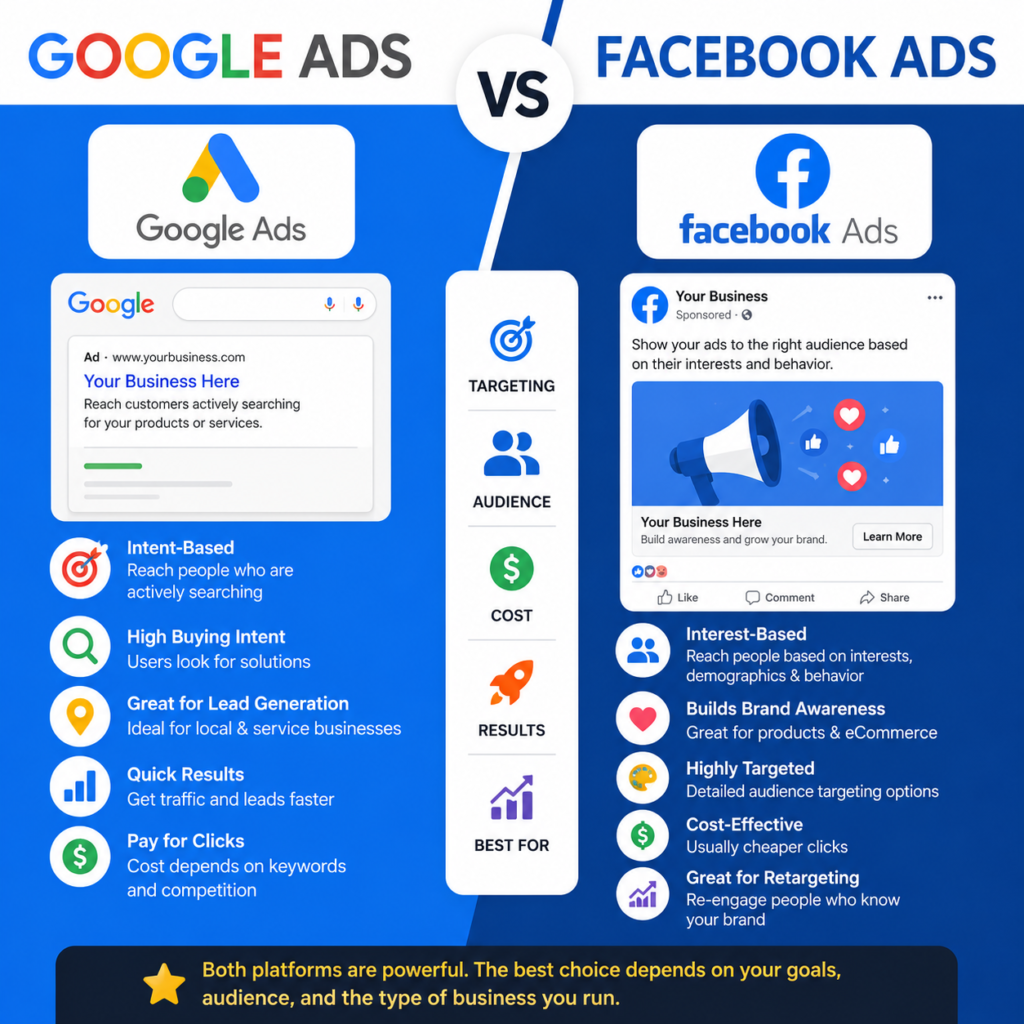
Campaign Costs: Which Platform Fits Your Budget Google Ads or Facebook Ads?
Technical SEO Made Simple: A Powerful Beginner’s Guide to Better Rankings
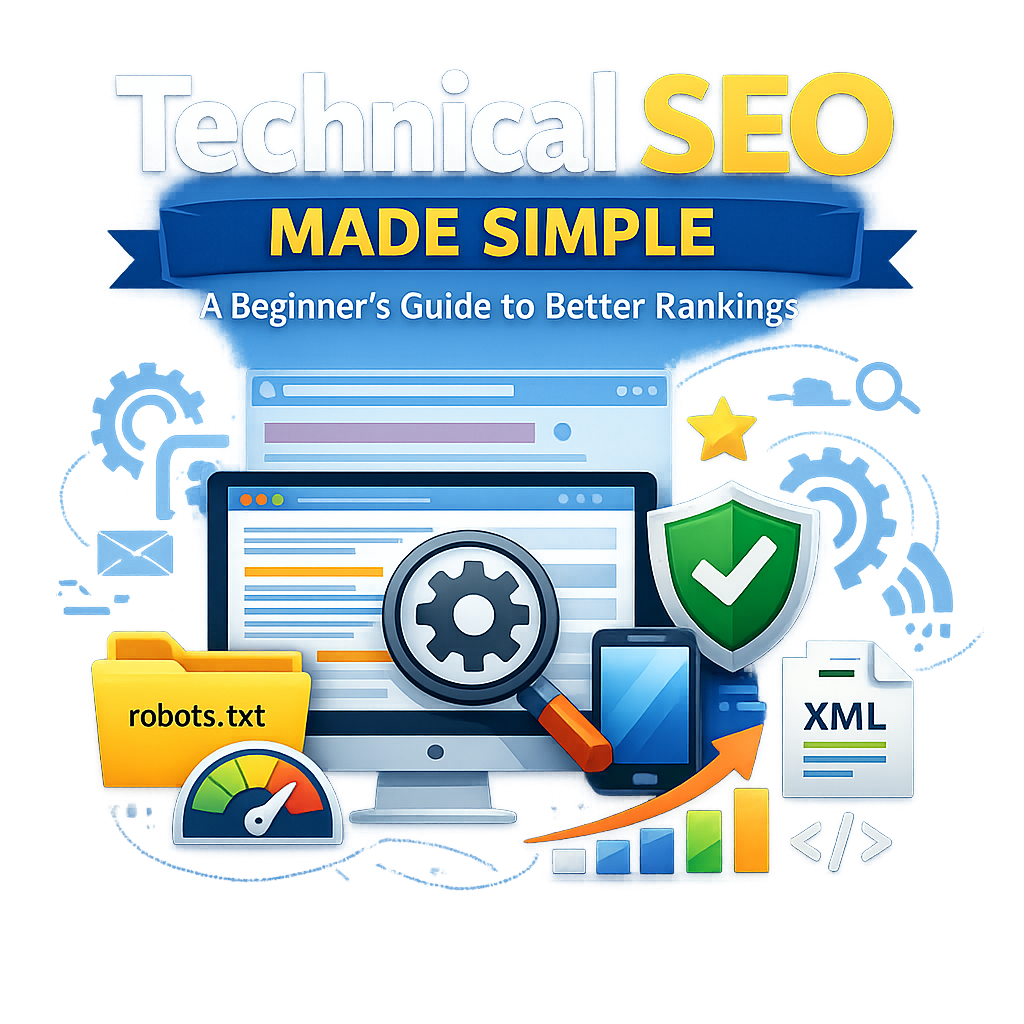
Introduction Creating useful content is only one part of improving your website. Search engines also need to access, understand, and organize your pages correctly. If they cannot do this, your content may not appear in search results, even if it is well written. This is where Technical SEO becomes important. It focuses on improving the technical health of your website so that search engines can work with it more efficiently. A technically strong website also gives visitors a smoother browsing experience. Many beginners think Technical SEO is difficult because it sounds technical. In reality, you can improve many important areas without advanced programming skills. Learning a few basic concepts can make a big difference in your website’s performance. This guide explains Technical SEO in simple language. It will help you understand the essential steps needed to create a website that is easy for both users and search engines to use. What Does Technical SEO Mean? Technical SEO refers to the improvements you make to the structure and performance of your website. These improvements help search engines discover your pages, understand your content, and include it in search results. Unlike content SEO, which focuses on writing articles and using keywords, Technical SEO focuses on how the website functions. It covers areas such as: When these elements work well together, your website becomes easier to access and manage. Why Should Beginners Learn Technical SEO? Many website owners spend hours writing blog posts but ignore technical issues. As a result, search engines may struggle to access important pages. Technical SEO creates a strong base that supports every other SEO activity. Some important benefits include: Better Website Performance A technically optimized website loads faster and works smoothly on different devices. Easier Search Engine Access Search engines can move through your website more efficiently and understand your pages. Better Visitor Experience People enjoy websites that are fast, secure, and easy to navigate. Long-Term SEO Support Technical improvements continue helping your website as you publish new content in the future. 1. Improve Your Website Loading Time Website speed plays a major role in user experience. Visitors usually expect a page to appear within a few seconds. If they have to wait too long, many leave before reading the content. A faster website also allows search engines to process more pages during each visit. You can improve loading speed by following these simple steps: Small improvements in speed can make your website feel much more responsive. 2. Make Every Page Easy to Use on Mobile Devices Today, many visitors browse websites using smartphones instead of desktop computers. A website that looks good on a computer but performs poorly on a phone may lose potential customers. Your website should automatically adjust to different screen sizes. Check the following: A responsive design creates a better experience for every visitor. 3. Protect Your Website with HTTPS Security is another important part of Technical SEO. HTTPS protects the information exchanged between your website and its visitors. It also increases confidence because users know their connection is secure. Most modern websites already use HTTPS, but it is important to confirm that every page loads through the secure version. A secure website offers several advantages: Keeping your website secure should always be a priority. 4. Organize Your URLs Clearly Every webpage has its own web address, called a URL. A well-organized URL tells both visitors and search engines what the page is about. Instead of creating long addresses with random numbers or symbols, use simple words that describe the content. For example, a page about Technical SEO should have a URL that clearly reflects that topic. Good URL practices include: Clean URLs improve organization and make pages easier to share. 5. Help Search Engines Discover Your Pages with an XML Sitemap An XML sitemap is a file that lists the important pages on your website. It helps search engines understand which pages you want them to visit and index. Although search engines can often find pages by following links, a sitemap provides a clear guide and reduces the chance that important content will be missed. To keep your sitemap useful: A well-maintained sitemap supports better website organization and helps search engines stay updated. Conclusion of Part 1 Technical SEO may sound complex at first, but its main purpose is simple. It helps your website perform well for both visitors and search engines. A fast, secure, mobile-friendly website with a clear structure creates a stronger foundation for all your future SEO work. In this first part, you learned the basics of Technical SEO and explored five essential areas: website speed, mobile responsiveness, HTTPS security, clean URLs, and XML sitemaps. These improvements are practical, beginner-friendly, and valuable for websites of every size. In Part 2, you will learn about robots.txt, crawlability, indexing, structured data, Core Web Vitals, common Technical SEO mistakes, a practical checklist, frequently asked questions, and simple steps to keep improving your website over time.
On-Page SEO Guide: Improve Rankings in 16 Step by Step
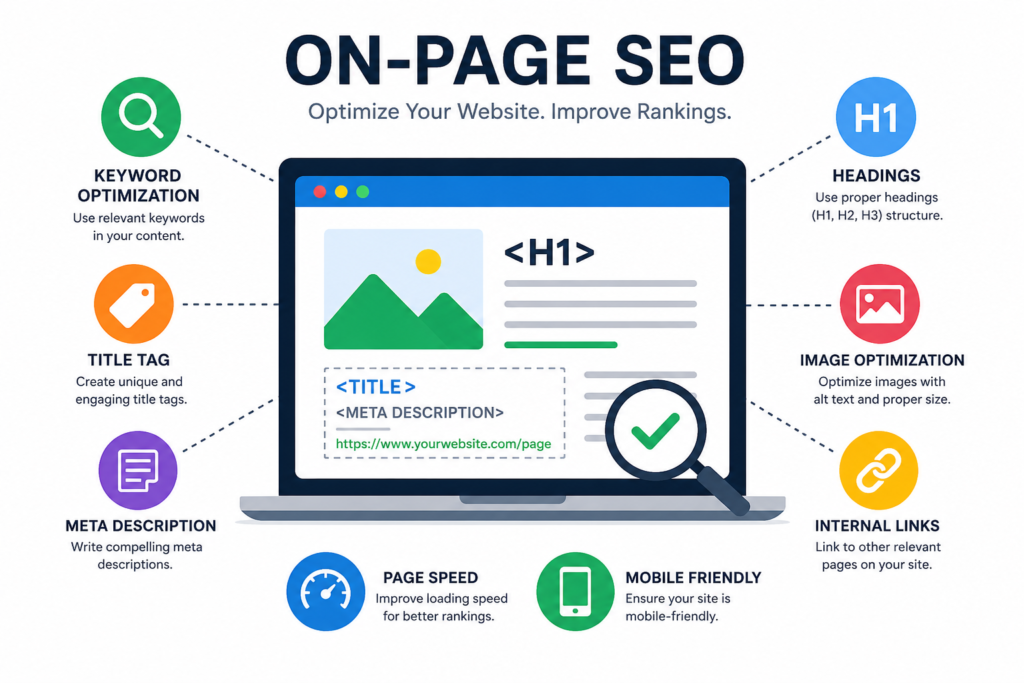
Introduction If you want your website to appear higher on Google, you need good on-page SEO. Every day, millions of people search online for products, services, and information. If your web pages are well optimized, they have a better chance of reaching those people. On-page SEO is one of the most important parts of search engine optimization. It helps search engines understand your content and improves the experience for your visitors. Unlike paid advertising, good on-page SEO can bring free traffic to your website over time. The best part is that you do not need to be an SEO expert to improve your pages. By following a few simple steps, you can make your content easier to read, easier to understand, and more valuable for both users and search engines. In this guide, you will learn how to improve your website step by step. Whether you are a beginner, a blogger, a small business owner, or a digital marketer, these tips will help you build stronger web pages and improve your search rankings. What Is On-Page SEO? On-page SEO is the process of optimizing the content and elements on a webpage. The goal is to help search engines understand your page and show it to people who are searching for related information. Everything you can change on your own webpage is part of on-page SEO. This includes your page title, headings, content, images, internal links, URL, and meta description. Good on-page SEO makes your pages more useful. It also helps visitors find the answers they need without confusion. Why Is On-Page SEO Important? Search engines want to show the best results for every search. If your page is helpful, easy to read, and well organized, it has a better chance of ranking higher. Good on-page SEO offers many benefits. Even small improvements can make a noticeable difference over time. Step 1: Find the Right Keyword Every successful SEO page starts with keyword research. A keyword is the word or phrase that people type into Google. For example, if you are writing this article, your main keyword is On-Page SEO Guide: Improve Rankings Step by Step. Choose one primary keyword for each page. Then add a few related keywords naturally throughout your content. When selecting keywords: Good keyword research helps you create content that answers real questions. Step 2: Create an SEO-Friendly Title Your page title is one of the first things people see in Google search results. A strong title encourages users to click your page. A good SEO title should: Instead of writing a vague title, make it specific and useful. Example: On-Page SEO Guide: Improve Rankings Step by Step This title tells readers exactly what they will learn. For More information visit website onlinemarketingagencys.com Step 3: Write a Clear Meta Description A meta description is a short summary of your page. It appears below the title in search results. Although it does not directly improve rankings, it can increase your click-through rate. A good meta description should: Write every meta description for people first. Step 4: Use a Simple URL Your URL should describe your page. Keep it short and meaningful. Good example: yourwebsite.com/on-page-seo-guide Poor example: yourwebsite.com/page?id=67589 Simple URLs are easier to remember and easier for search engines to understand. Step 5: Organize Content with Headings Headings help readers scan your content quickly. They also help search engines understand your page structure. Use only one H1 heading for each page. Use H2 headings for your main sections. Use H3 headings for smaller topics under each section. A clear structure makes your article easier to read. Step 6: Write Helpful Content Quality content is the foundation of on-page SEO. Write content that answers your readers’ questions. Avoid writing only to include keywords. Instead: Useful content keeps visitors on your website longer and encourages them to return. Step 7: Use Keywords Naturally Your keyword should appear naturally throughout the article. You can include it in: Do not repeat the same keyword again and again. Google understands related words and phrases, so write naturally. Step 8: Optimize Your Images Images make your article more interesting. They also improve user engagement. Before uploading an image: Optimized images help pages load faster and improve accessibility for all users. Step 9: Add Internal Links Internal links connect one page of your website to another page on the same website. They help visitors find more useful information. They also help search engines understand your website structure. For example, if you have another article about keyword research, add a link to it in this blog. This keeps visitors on your website longer and helps Google crawl your pages more easily. Benefits of Internal Links Always use meaningful anchor text. Instead of writing “Click Here,” use words that describe the linked page. Step 10: Add External Links External links point to trusted websites outside your own website. These links show that your content is supported by reliable information. They also help readers learn more about the topic. Only link to websites that are trustworthy and relevant. Avoid linking to low-quality or spam websites. Do not add too many external links. Use them only when they improve your content. Step 11: Improve Page Speed Website speed is very important for SEO. People do not like slow websites. If a page takes too long to load, many visitors leave before reading the content. Google also considers page speed when ranking websites. Ways to Improve Page Speed A faster website creates a better experience for your visitors. Step 12: Make Your Website Mobile-Friendly Today, most people use smartphones to browse the internet. Your website should look good on every screen size. A mobile-friendly website should: Google uses mobile-first indexing. This means it mainly looks at the mobile version of your website when deciding rankings. Step 13: Improve Content Readability Visitors enjoy content that is easy to read. Write short sentences. Keep paragraphs short. Use simple words whenever possible. Add headings and bullet points to organize your content. Avoid using
Best Free SEO Tools Every Marketer Should Use in 2026

Introduction Search Engine Optimization (SEO) helps your website get more visitors from Google and other search engines. Good SEO can increase your website traffic, improve your online visibility, and bring more customers to your business. Many people think they need expensive software to improve their SEO. That is not true. Many free SEO tools offer powerful features that help you find keywords, check your website, track rankings, and improve your content. In this guide, you will learn about the best free SEO tools every marketer should use. These tools are easy to use and suitable for beginners, bloggers, business owners, and digital marketers. Why Should You Use Free SEO Tools? Free SEO tools help you understand how your website performs in search engines. They also help you find problems before they affect your rankings. Some benefits of using free SEO tools include: Whether you run a blog, an e-commerce website, or a business website, these tools can help you grow your online presence. For more information visitHome Top 10 Best Free SEO Tools Every Marketer Should Use in 2026 1. Google Search Console Google Search Console is one of the most important free SEO tools. It comes directly from Google and shows how your website performs in Google Search. Key Features Why You Should Use It Google Search Console tells you exactly how Google sees your website. Every website owner should set it up as soon as possible. 2. Google Analytics Google Analytics helps you understand your website visitors. It shows where visitors come from, what pages they visit, and how long they stay on your website. Key Features Why You Should Use It The more you understand your visitors, the better you can improve your website. 3. Google Keyword Planner Google Keyword Planner helps you discover keywords that people search for. Although it is designed for Google Ads, it is also useful for SEO. Key Features Why You Should Use It Keyword research is the first step of every successful SEO strategy. 4. Google Trends Google Trends shows what people are searching for. It compares search popularity over time and helps you identify trending topics. Key Features Why You Should Use It Google Trends helps you create content that people are searching for right now. 5. Ubersuggest (Free Version) Ubersuggest is a beginner-friendly SEO tool that provides keyword ideas and website analysis. Key Features Why You Should Use It It offers many useful SEO features in one place. 6. Ahrefs Free Webmaster Tools Ahrefs offers free tools for website owners. These tools help you monitor your website’s SEO health. Key Features Why You Should Use It It helps you find technical problems that may affect your rankings. 7. Screaming Frog SEO Spider (Free Version) Screaming Frog scans your website just like a search engine. The free version allows you to crawl up to 500 pages. Key Features Why You Should Use It It quickly finds technical SEO issues that are difficult to detect manually. 8. AnswerThePublic AnswerThePublic helps you discover questions that people ask online. These questions can become blog topics. Key Features Why You Should Use It It helps you create content that answers real customer questions. 9. SEOquake SEOquake is a free browser extension. It provides SEO information while you browse websites. Key Features Why You Should Use It It is useful for competitor research and quick SEO analysis. 10. PageSpeed Insights Website speed affects both user experience and SEO. PageSpeed Insights helps you measure your website speed. Key Features Why You Should Use It A faster website keeps visitors happy and can improve search rankings. How to Choose the Right SEO Tool Every SEO tool has a different purpose. Use this simple guide: Using these tools together gives you a complete SEO strategy. Tips for Getting Better SEO Results Using SEO tools alone will not improve your rankings. You also need good SEO practices. Follow these tips: Consistency is one of the biggest factors in SEO success. Common SEO Mistakes to Avoid Many beginners make mistakes that reduce their rankings. Avoid these common errors: Fixing these mistakes can improve your website over time. Conclusion You do not need expensive software to build a successful SEO strategy. Many free SEO tools provide everything you need to improve your website, find better keywords, monitor your rankings, and create valuable content. If you are just getting started, begin with Google Search Console and Google Analytics. Then use Google Keyword Planner, Google Trends, Ubersuggest, and the other tools in this guide to strengthen your SEO efforts. Remember that SEO is a long-term process. Keep learning, publish helpful content, and use these free SEO tools regularly. With patience and consistency, your website can achieve better rankings, attract more visitors, and grow your business. Start using these free SEO tools today and take the first step toward improving your website’s search engine performance. For More Information visit our website onlinemarketingagencys.com
How To Improve Your Website Ranking On Google In 2026
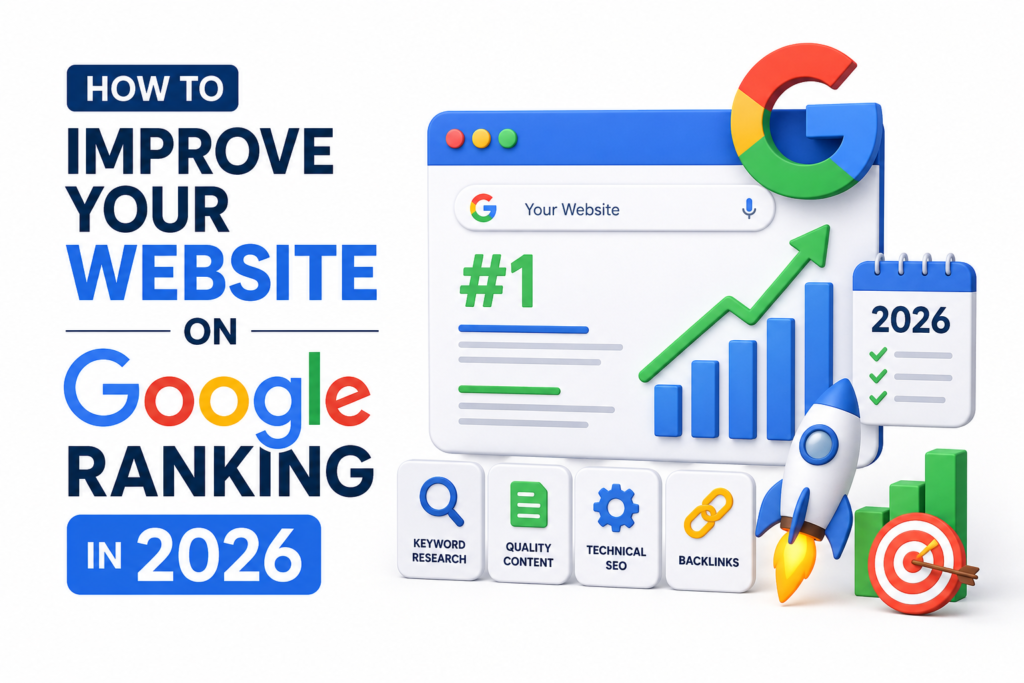
How To Improve Your Website Ranking On Google In 2026