Powerful Guide on How to Make Safe Backlinks for Higher Google Rankings in 2026 in 8 simple step
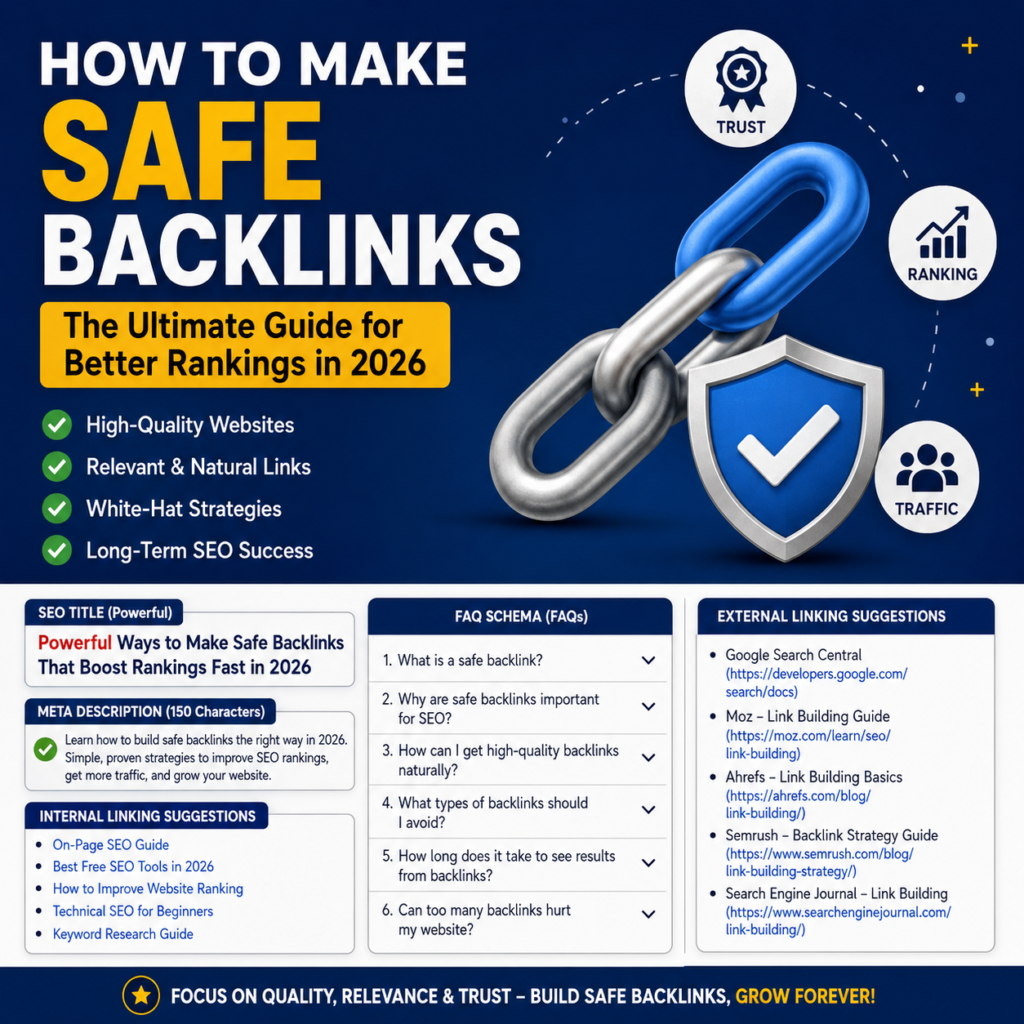
Introduction Every website owner wants to appear on the first page of Google. One of the best ways to achieve this goal is by building safe backlinks. If you are searching for how to make safe backlinks, you need to focus on quality instead of quantity. A few links from trusted websites are much more valuable than hundreds of links from low-quality sites. Google has become smarter over the years. Its algorithm can easily detect spammy or paid links that try to manipulate search rankings. That is why white hat SEO has become more important than ever. Safe backlinks improve your website’s authority, increase organic traffic, and help build long-term trust with search engines. In this guide, you will learn ethical and practical methods for earning quality backlinks that follow Google’s SEO best practices. These strategies are suitable for beginners, bloggers, business owners, and digital marketers who want sustainable SEO results in 2026. What Are Safe Backlinks? Safe backlinks are links from trustworthy and relevant websites that point to your website naturally. These links are earned because your content provides value to readers, not because you paid for them or used manipulative SEO techniques. For example, imagine you publish a detailed guide about email marketing. If a popular marketing blog links to your article because it helps their readers, that is a safe backlink. Google considers these links as a positive signal of trust. On the other hand, links from spam websites, link farms, or unrelated directories can harm your website. They may reduce your Google ranking instead of improving it. For More information visit onlinemarketingagencys.com Why Safe Backlinks Matter for SEO Many people think backlinks are only about increasing rankings. In reality, safe backlinks offer many long-term benefits. They Build Website Authority When respected websites recommend your content, search engines consider your website more reliable. This improves your online authority over time. They Increase Organic Traffic Visitors can discover your website through backlinks placed on relevant blogs, news sites, or industry resources. These visitors are usually interested in your content, making them more likely to engage with your website. They Support Long-Term SEO Growth Safe backlinks follow SEO best practices, so they continue to benefit your website even after future Google algorithm updates. They Improve Brand Visibility Every quality backlink introduces your website to a new audience. Over time, this helps build trust and brand recognition in your industry. How to Make Safe Backlinks Using White Hat SEO Building backlinks should never feel like a shortcut. Instead, focus on earning links by creating value for others. 1. Publish Content That Solves Real Problems People naturally link to content that answers questions or solves common problems. Examples include: Instead of writing short articles with basic information, create complete resources that readers will want to save and share. For example, if your website is about digital marketing, you could publish: Helpful content becomes a linkable asset that attracts authority backlinks over time. 2. Write Guest Posts for Trusted Websites Guest posting remains one of the safest methods of natural link building when done correctly. Choose websites that: Avoid websites that publish hundreds of guest posts every month without reviewing quality. Write articles that genuinely educate readers instead of promoting your business. A natural backlink inside your author bio or article is usually enough. 3. Create Original Research and Statistics Original data attracts links because writers and journalists often need reliable sources. You can create: For example, if you analyze the SEO performance of 100 local businesses and publish the results, other bloggers may cite your research and link back to your article. This type of link earning creates high-value backlinks without asking anyone for links. 4. Build Relationships Instead of Only Building Links Many beginners send hundreds of outreach emails asking for backlinks. This approach rarely works. Instead, build genuine relationships with: Leave thoughtful comments on their articles, share their content, and engage with them on social media. Over time, these relationships often lead to natural backlink opportunities. Networking creates stronger results than cold outreach alone. 5. Turn Your Content into Different Formats Different people prefer different types of content. You can convert one article into: Visual content is easier to share and often earns backlinks from websites looking for useful resources. Coming in Part 2 In the next part, you’ll learn: This second part will complete the article and bring the total length to approximately 1,000 words. Now write Part 2 How to Make Safe Backlinks: A Practical Guide to Improve Google Ranking in 2026 (Part 2) 6. Find Broken Links and Offer a Better Resource Broken link building is one of the safest white hat SEO techniques. Many websites have links that no longer work because the original page was removed or the URL changed. You can use SEO tools to find broken links on websites related to your niche. If you already have similar content, contact the website owner and politely suggest replacing the broken link with your article. This strategy benefits both sides. The website owner fixes an error, and you earn a quality backlink from a relevant page. 7. Get Listed on Resource Pages Many websites have a “Resources” or “Helpful Links” page where they recommend useful websites and guides. If your content is informative and relevant, you can request to be included on these pages. Before reaching out, make sure your article is well-written, updated, and provides real value. A backlink from a trusted resource page is an excellent example of authority backlinks that support long-term SEO growth. 8. Promote Your Content Consistently Publishing great content is only the first step. People need to discover it before they can link to it. Promote your articles through: The more people who see your content, the greater the chance of earning natural backlinks. Remember, promotion is not about asking everyone for a link. It is about increasing visibility so others can decide whether your content deserves a mention. Backlink Practices You Should Avoid Some link-building methods
Powerful Off-Page SEO Strategies That Can Boost Your Google Rankings in 2026
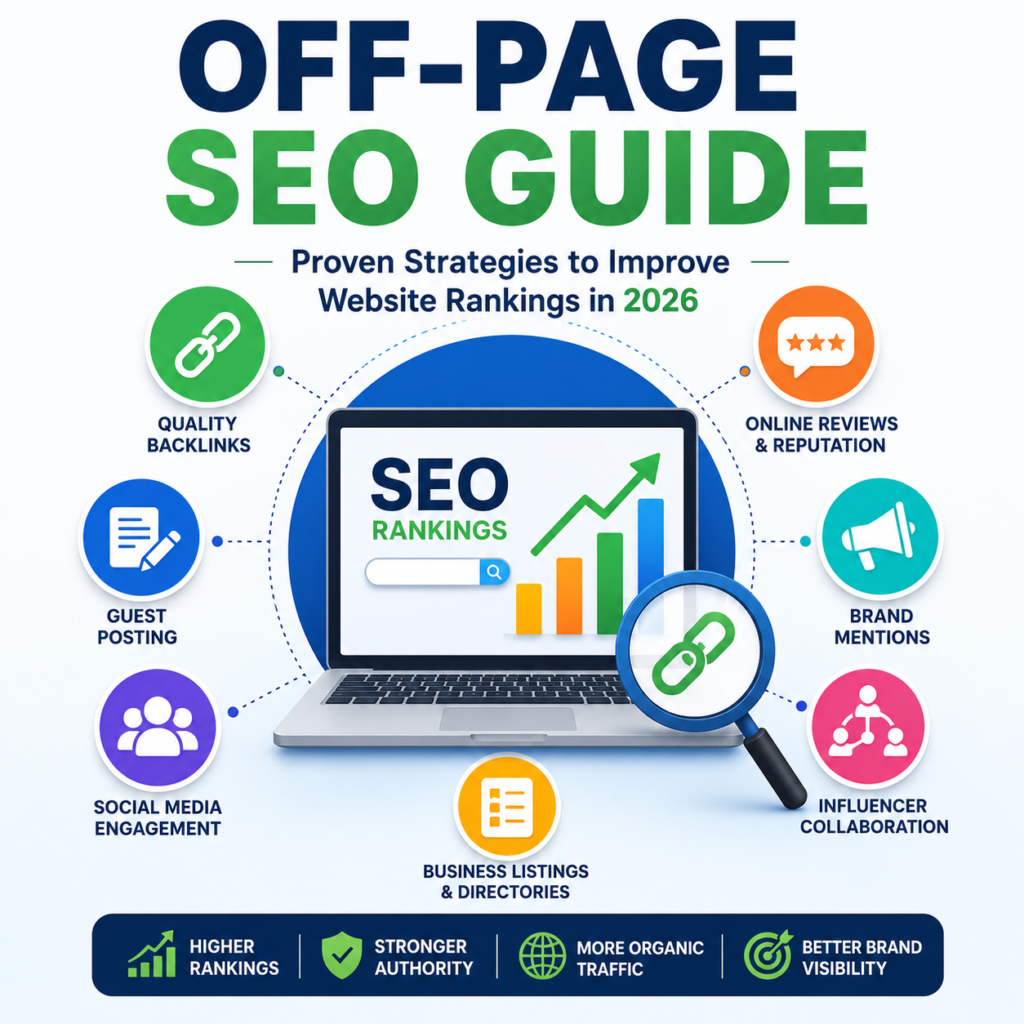
Introduction Getting a website ranked on Google is not only about creating good content or adding the right keywords. Search engines also check how popular, trustworthy, and valuable a website is compared to other websites. This is where Off-Page SEO becomes important. Off-Page SEO is a process of improving your website’s reputation through activities performed outside your website. It helps search engines understand that your website is reliable and provides useful information to users. A strong Off-Page SEO strategy can help businesses increase website authority, improve search rankings, attract more visitors, and build a strong online presence. In this article, we will understand what Off-Page SEO is, why it matters, important techniques, common mistakes, and best practices to improve your website performance. What is Off-Page SEO? Off-Page SEO refers to all activities that are performed outside your website to improve its visibility and ranking on search engines. The main purpose of Off-Page SEO is to build trust and authority for your website. When other trusted websites mention or link to your website, search engines consider it a positive signal. For example, if a popular website in your industry links to your blog, Google understands that your content is valuable. This can improve your chances of ranking higher in search results. Some important Off-Page SEO activities include: Unlike On-Page SEO, which focuses on improving elements inside your website, Off-Page SEO focuses on increasing your website reputation across the internet. Why Off-Page SEO is Important for Websites? Off-Page SEO is a major part of modern SEO strategies because search engines want to show trustworthy websites in search results. Here are some important reasons why Off-Page SEO is necessary: 1. Helps Improve Search Rankings Search engines use many ranking factors to decide which websites should appear at the top. One important factor is website authority. When your website receives links from reliable sources, it creates trust signals for search engines. As your authority improves, your website can achieve better rankings. Higher rankings can help your business receive more visitors from organic search results. For more information visit our website onlinemarketingagencys.com 2. Builds Website Trust and Credibility Trust plays an important role in online success. Users prefer websites that appear reliable and recommended by others. When your brand gets mentioned on trusted platforms, it improves your credibility. People are more likely to visit and engage with a website that has a strong online reputation. 3. Brings More Website Traffic A successful Off-Page SEO strategy can generate traffic from different sources. For example, a backlink from a popular blog can bring visitors directly to your website. Social media shares can also introduce your content to a larger audience. More visitors create more opportunities for leads, sales, and business growth. 4. Increases Brand Visibility Off-Page SEO helps more people discover your brand online. When your business appears on different platforms, websites, and social media channels, customers become more familiar with your brand. Consistent brand visibility helps create a stronger position in your industry. On-Page SEO vs Off-Page SEO SEO is divided into different areas, and On-Page SEO and Off-Page SEO are two important parts. On-Page SEO On-Page SEO focuses on improving elements within your website. Examples include: Off-Page SEO Off-Page SEO focuses on activities outside your website. Examples include: Both strategies work together. A website needs strong On-Page and Off-Page SEO to achieve better results. Effective Off-Page SEO Techniques 1. Quality Link Building Link building is one of the most powerful Off-Page SEO methods. A backlink is a link from another website that directs users to your website. Search engines consider backlinks as recommendations. However, quality matters more than quantity. A few backlinks from trusted and relevant websites are more valuable than hundreds of low-quality links. Good backlinks usually come from: Avoid spam links because they can negatively affect your website ranking. 2. Guest Blogging Guest blogging means publishing your content on another website within your industry. It helps you reach a new audience and build authority. Benefits of guest posting include: For better results, write useful content that solves problems instead of only promoting your products or services. 3. Social Media Engagement Social media platforms are useful for increasing content visibility and connecting with customers. Sharing your blogs, videos, and updates on platforms like Facebook, Instagram, LinkedIn, and X can help more people discover your brand. Social media activities can help you: A strong social media presence supports your overall SEO strategy. 4. Local SEO and Business Listings For local businesses, business listings are an important part of Off-Page SEO. Adding your business information to trusted directories helps customers find your services easily. Make sure your business details are consistent everywhere, including: Accurate business information improves trust and local search visibility. 5. Customer Reviews and Reputation Management Online reviews influence customer decisions and business reputation. Positive reviews show that customers trust your products or services. Businesses should encourage happy customers to share genuine feedback. Reviews can help improve: Always respond professionally to both positive and negative reviews. 6. Content Promotion Creating great content is not enough. You also need to promote it. Content promotion helps your articles, videos, and resources reach more people. Effective content promotion methods include: When more people see your content, the chances of earning natural backlinks increase. 7. Influencer Collaboration Working with influencers can help increase brand awareness. An influencer with a relevant audience can introduce your business to potential customers. Choose influencers based on: A genuine recommendation can improve trust and attract new visitors. 8. Online Community Participation Participating in online communities can support your Off-Page SEO efforts. You can join industry forums, answer questions, and share helpful knowledge. The goal should be to provide value instead of posting promotional links everywhere. Helpful participation can increase your authority and build relationships. Common Off-Page SEO Mistakes Avoid these mistakes to protect your website performance: 1. Creating Spam Backlinks Getting many backlinks quickly from low-quality websites can harm your SEO. Focus on earning natural and relevant links. 2. Ignoring Content Quality
On-Page SEO Guide: Improve Rankings in 16 Step by Step
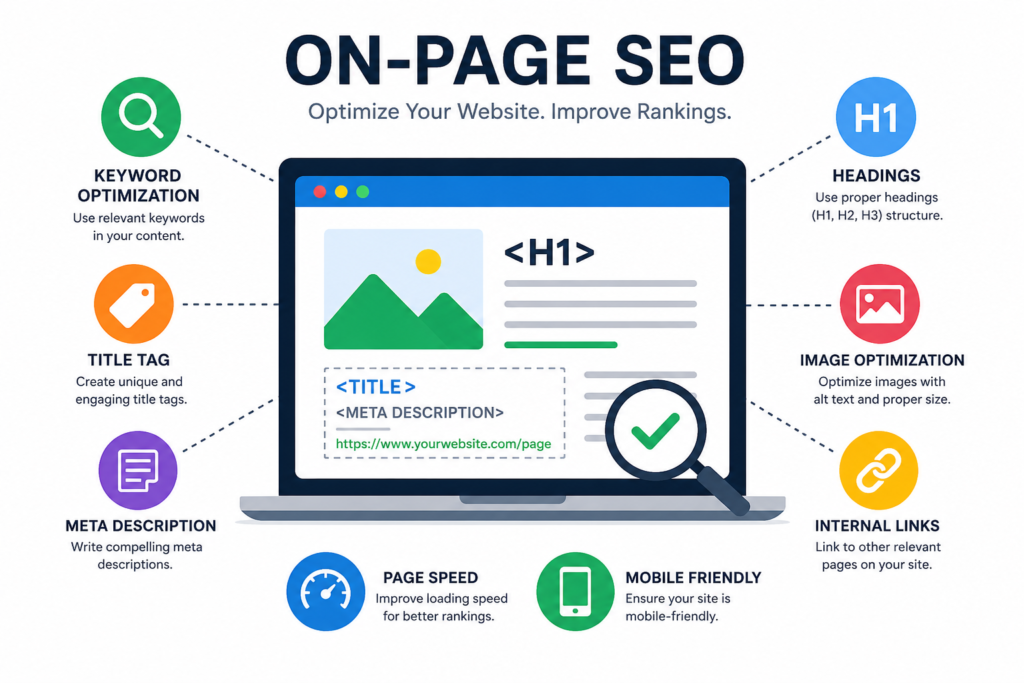
Introduction If you want your website to appear higher on Google, you need good on-page SEO. Every day, millions of people search online for products, services, and information. If your web pages are well optimized, they have a better chance of reaching those people. On-page SEO is one of the most important parts of search engine optimization. It helps search engines understand your content and improves the experience for your visitors. Unlike paid advertising, good on-page SEO can bring free traffic to your website over time. The best part is that you do not need to be an SEO expert to improve your pages. By following a few simple steps, you can make your content easier to read, easier to understand, and more valuable for both users and search engines. In this guide, you will learn how to improve your website step by step. Whether you are a beginner, a blogger, a small business owner, or a digital marketer, these tips will help you build stronger web pages and improve your search rankings. What Is On-Page SEO? On-page SEO is the process of optimizing the content and elements on a webpage. The goal is to help search engines understand your page and show it to people who are searching for related information. Everything you can change on your own webpage is part of on-page SEO. This includes your page title, headings, content, images, internal links, URL, and meta description. Good on-page SEO makes your pages more useful. It also helps visitors find the answers they need without confusion. Why Is On-Page SEO Important? Search engines want to show the best results for every search. If your page is helpful, easy to read, and well organized, it has a better chance of ranking higher. Good on-page SEO offers many benefits. Even small improvements can make a noticeable difference over time. Step 1: Find the Right Keyword Every successful SEO page starts with keyword research. A keyword is the word or phrase that people type into Google. For example, if you are writing this article, your main keyword is On-Page SEO Guide: Improve Rankings Step by Step. Choose one primary keyword for each page. Then add a few related keywords naturally throughout your content. When selecting keywords: Good keyword research helps you create content that answers real questions. Step 2: Create an SEO-Friendly Title Your page title is one of the first things people see in Google search results. A strong title encourages users to click your page. A good SEO title should: Instead of writing a vague title, make it specific and useful. Example: On-Page SEO Guide: Improve Rankings Step by Step This title tells readers exactly what they will learn. For More information visit website onlinemarketingagencys.com Step 3: Write a Clear Meta Description A meta description is a short summary of your page. It appears below the title in search results. Although it does not directly improve rankings, it can increase your click-through rate. A good meta description should: Write every meta description for people first. Step 4: Use a Simple URL Your URL should describe your page. Keep it short and meaningful. Good example: yourwebsite.com/on-page-seo-guide Poor example: yourwebsite.com/page?id=67589 Simple URLs are easier to remember and easier for search engines to understand. Step 5: Organize Content with Headings Headings help readers scan your content quickly. They also help search engines understand your page structure. Use only one H1 heading for each page. Use H2 headings for your main sections. Use H3 headings for smaller topics under each section. A clear structure makes your article easier to read. Step 6: Write Helpful Content Quality content is the foundation of on-page SEO. Write content that answers your readers’ questions. Avoid writing only to include keywords. Instead: Useful content keeps visitors on your website longer and encourages them to return. Step 7: Use Keywords Naturally Your keyword should appear naturally throughout the article. You can include it in: Do not repeat the same keyword again and again. Google understands related words and phrases, so write naturally. Step 8: Optimize Your Images Images make your article more interesting. They also improve user engagement. Before uploading an image: Optimized images help pages load faster and improve accessibility for all users. Step 9: Add Internal Links Internal links connect one page of your website to another page on the same website. They help visitors find more useful information. They also help search engines understand your website structure. For example, if you have another article about keyword research, add a link to it in this blog. This keeps visitors on your website longer and helps Google crawl your pages more easily. Benefits of Internal Links Always use meaningful anchor text. Instead of writing “Click Here,” use words that describe the linked page. Step 10: Add External Links External links point to trusted websites outside your own website. These links show that your content is supported by reliable information. They also help readers learn more about the topic. Only link to websites that are trustworthy and relevant. Avoid linking to low-quality or spam websites. Do not add too many external links. Use them only when they improve your content. Step 11: Improve Page Speed Website speed is very important for SEO. People do not like slow websites. If a page takes too long to load, many visitors leave before reading the content. Google also considers page speed when ranking websites. Ways to Improve Page Speed A faster website creates a better experience for your visitors. Step 12: Make Your Website Mobile-Friendly Today, most people use smartphones to browse the internet. Your website should look good on every screen size. A mobile-friendly website should: Google uses mobile-first indexing. This means it mainly looks at the mobile version of your website when deciding rankings. Step 13: Improve Content Readability Visitors enjoy content that is easy to read. Write short sentences. Keep paragraphs short. Use simple words whenever possible. Add headings and bullet points to organize your content. Avoid using
Best Free SEO Tools Every Marketer Should Use in 2026
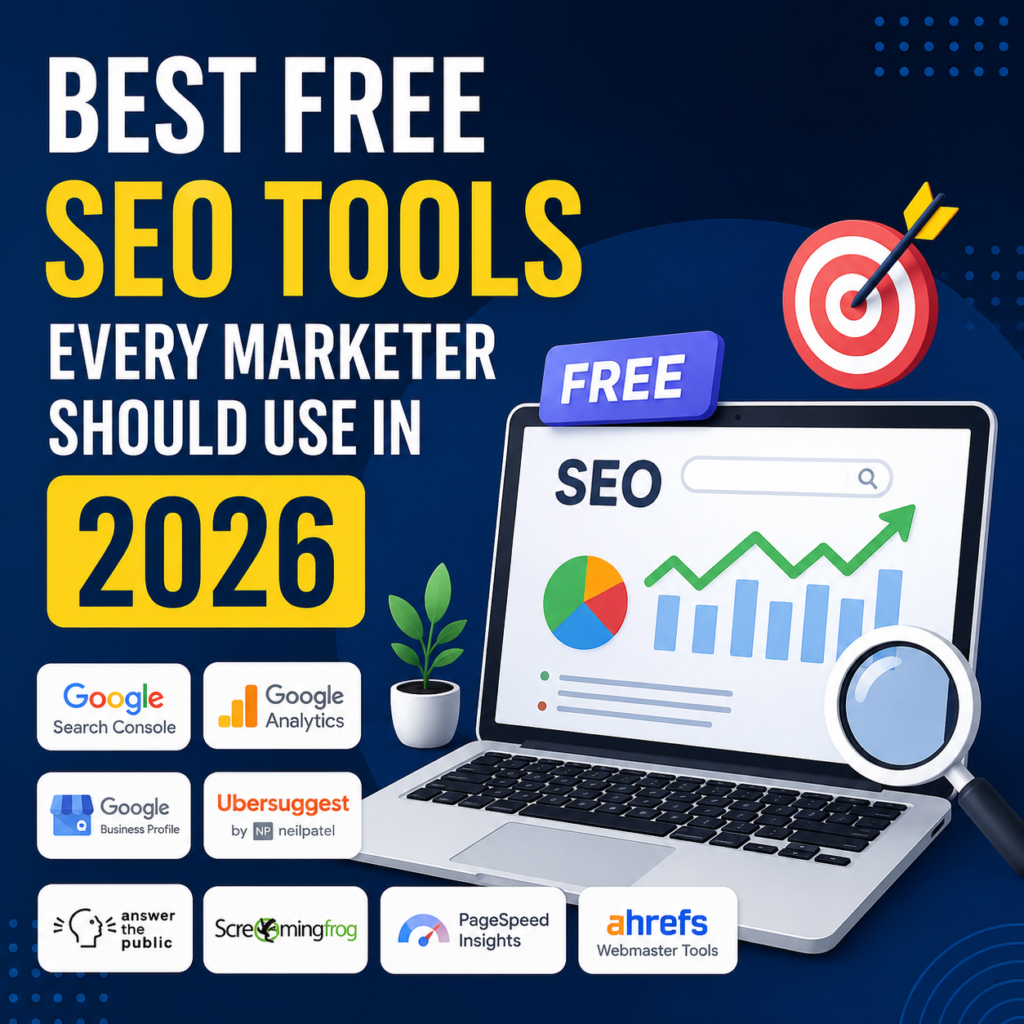
Introduction Search Engine Optimization (SEO) helps your website get more visitors from Google and other search engines. Good SEO can increase your website traffic, improve your online visibility, and bring more customers to your business. Many people think they need expensive software to improve their SEO. That is not true. Many free SEO tools offer powerful features that help you find keywords, check your website, track rankings, and improve your content. In this guide, you will learn about the best free SEO tools every marketer should use. These tools are easy to use and suitable for beginners, bloggers, business owners, and digital marketers. Why Should You Use Free SEO Tools? Free SEO tools help you understand how your website performs in search engines. They also help you find problems before they affect your rankings. Some benefits of using free SEO tools include: Whether you run a blog, an e-commerce website, or a business website, these tools can help you grow your online presence. For more information visitHome Top 10 Best Free SEO Tools Every Marketer Should Use in 2026 1. Google Search Console Google Search Console is one of the most important free SEO tools. It comes directly from Google and shows how your website performs in Google Search. Key Features Why You Should Use It Google Search Console tells you exactly how Google sees your website. Every website owner should set it up as soon as possible. 2. Google Analytics Google Analytics helps you understand your website visitors. It shows where visitors come from, what pages they visit, and how long they stay on your website. Key Features Why You Should Use It The more you understand your visitors, the better you can improve your website. 3. Google Keyword Planner Google Keyword Planner helps you discover keywords that people search for. Although it is designed for Google Ads, it is also useful for SEO. Key Features Why You Should Use It Keyword research is the first step of every successful SEO strategy. 4. Google Trends Google Trends shows what people are searching for. It compares search popularity over time and helps you identify trending topics. Key Features Why You Should Use It Google Trends helps you create content that people are searching for right now. 5. Ubersuggest (Free Version) Ubersuggest is a beginner-friendly SEO tool that provides keyword ideas and website analysis. Key Features Why You Should Use It It offers many useful SEO features in one place. 6. Ahrefs Free Webmaster Tools Ahrefs offers free tools for website owners. These tools help you monitor your website’s SEO health. Key Features Why You Should Use It It helps you find technical problems that may affect your rankings. 7. Screaming Frog SEO Spider (Free Version) Screaming Frog scans your website just like a search engine. The free version allows you to crawl up to 500 pages. Key Features Why You Should Use It It quickly finds technical SEO issues that are difficult to detect manually. 8. AnswerThePublic AnswerThePublic helps you discover questions that people ask online. These questions can become blog topics. Key Features Why You Should Use It It helps you create content that answers real customer questions. 9. SEOquake SEOquake is a free browser extension. It provides SEO information while you browse websites. Key Features Why You Should Use It It is useful for competitor research and quick SEO analysis. 10. PageSpeed Insights Website speed affects both user experience and SEO. PageSpeed Insights helps you measure your website speed. Key Features Why You Should Use It A faster website keeps visitors happy and can improve search rankings. How to Choose the Right SEO Tool Every SEO tool has a different purpose. Use this simple guide: Using these tools together gives you a complete SEO strategy. Tips for Getting Better SEO Results Using SEO tools alone will not improve your rankings. You also need good SEO practices. Follow these tips: Consistency is one of the biggest factors in SEO success. Common SEO Mistakes to Avoid Many beginners make mistakes that reduce their rankings. Avoid these common errors: Fixing these mistakes can improve your website over time. Conclusion You do not need expensive software to build a successful SEO strategy. Many free SEO tools provide everything you need to improve your website, find better keywords, monitor your rankings, and create valuable content. If you are just getting started, begin with Google Search Console and Google Analytics. Then use Google Keyword Planner, Google Trends, Ubersuggest, and the other tools in this guide to strengthen your SEO efforts. Remember that SEO is a long-term process. Keep learning, publish helpful content, and use these free SEO tools regularly. With patience and consistency, your website can achieve better rankings, attract more visitors, and grow your business. Start using these free SEO tools today and take the first step toward improving your website’s search engine performance. For More Information visit our website onlinemarketingagencys.com
Best SEO Strategies
Best SEO strategies for 2026 a complete guide to improve Google rankings. will help you to understand how to grow youe business?Search Engine Optimization (SEO) is constantly changing. Every year, Google updates its algorithms to provide users with better, more accurate, and more helpful search results. Businesses that want to stay visible online must update their Best SEO strategies for 2026 to improve google Ranking according to these changes. For this we have brought In 2026, SEO is no longer only about adding keywords to a website. Modern SEO focuses on user experience, high-quality content, search intent, website performance, artificial intelligence, and building trust with users. Businesses need a smart and balanced approach to improve their rankings, attract visitors, and generate more leads. Agrawal Ad Agency understands the latest SEO trends and helps businesses create effective strategies to achieve better visibility on search engines. Let’s explore the best SEO strategies that can help your business grow in 2026. Learn Best SEO Strategies For 2026 a complete guide to improve google ranking in 10 simple Step 1. Understand and Match Search Intent For Best sEO Strategies for 2026 Search intent is one of the most important factors in modern SEO. It refers to the reason behind a user’s search query. Google wants to show results that provide the exact information users are looking for. Before creating content, businesses should understand: For example, a person searching for “best digital marketing agency near me” may want to hire a marketing service, while someone searching “what is SEO” may only need basic information. Creating content that matches user intent helps improve rankings, increases user engagement, and builds trust with your audience. 2. Create High-Quality and Helpful Content Content continues to be one of the strongest ranking factors in SEO. However, in 2026, simply publishing large amounts of content will not be enough. Search engines focus more on content quality, originality, and usefulness. Your content should be: Long-form content, detailed guides, tutorials, and helpful blog posts often perform well because they provide complete information in one place. Businesses should focus on creating content that answers customer questions and provides real solutions instead of writing only for search engines. Learn more about SEO 3. Optimize Your Website for Mobile Users Mobile optimization has become essential because most people access websites through smartphones. Google follows mobile-first indexing, which means it mainly considers the mobile version of a website for ranking purposes. A mobile-friendly website should: A poor mobile experience can increase bounce rates and negatively affect rankings. Businesses should regularly test their websites on different devices to ensure users get the best experience. 4. Focus on Voice Search Optimization Voice search is becoming more popular as people use smart assistants and mobile voice features to find information quickly. Unlike traditional searches, voice searches are usually longer and more conversational. Businesses should optimize their content for natural language queries. For example, users may search: To optimize for voice search: Voice search optimization helps businesses capture more traffic from modern search methods. 5. Improve Local SEO for Better Visibility Local SEO is important for businesses that want to attract customers from specific locations. When people search for nearby services, Google displays local businesses based on relevance, location, and customer reviews. Important local SEO strategies include: A strong local SEO strategy helps businesses appear in local search results and attract more potential customers from their target area. 6. Improve Website Speed and Performance Website speed directly affects user experience and SEO performance. Visitors do not like waiting for slow websites, and a delayed loading time can increase website abandonment. To improve website speed: A fast website provides a better user experience, improves engagement, and increases the chances of higher search rankings. 7. Build High-Quality Backlinks Backlinks remain an important part of SEO because they show search engines that other websites trust your content. However, quality matters more than quantity. A few links from trusted websites are more valuable than hundreds of low-quality links. Effective backlink strategies include: Businesses should avoid spammy backlinks because they can harm website rankings. 8. Use Artificial Intelligence for Smarter SEO Artificial Intelligence (AI) is transforming the way businesses approach SEO. In 2026, AI tools can help marketers work faster and make better decisions. Businesses can use AI for: However, AI should support human creativity, not replace it. Successful SEO requires a combination of technology, experience, creativity, and understanding of customer needs. 9. Improve User Experience (UX) Google gives importance to websites that provide a positive user experience. A website should not only attract visitors but also keep them engaged. Important UX factors include: When users spend more time on your website and interact with your content, it sends positive signals to search engines. 10. Use Data and SEO Analytics Successful SEO requires continuous monitoring and improvement. Businesses should analyze their website performance regularly to understand what is working and what needs improvement. Important SEO metrics include: Using SEO analytics helps businesses make better decisions and improve their online marketing results. Final Thoughts Best SEO Strategies in 2026 for improved in google ranking is focused on providing value to users. Businesses that create helpful content, improve website performance, understand search intent, and use modern SEO techniques will have a better chance of achieving higher rankings. At Agrawal Ad Agency, we use advanced SEO strategies to help businesses increase website traffic, generate quality leads, and improve online visibility. Our goal is to create result-driven SEO campaigns that help businesses grow in the competitive digital world. If you want to improve your Google rankings and grow your online presence in 2026, contact Agrawal Ad Agency today and take your business to the next level.
Are you searching How To Start Online Marketing: A Beginner’s Guide

Today, nearly every business needs to establish an online Marketing presence. People use the internet to find products, services, and information. Online marketing is crucial today. To grow your business, build a personal brand, or start in online marketing, online marketing is essential. The good news is that anyone can start online marketing. You don’t need a big budget or special skills. In this article, you’ll learn what online marketing is, why it matters, and how to start step by step. How to start online marketing in 9 simple steps What Is Online Marketing? Online marketing promotes products, services, or brands on the internet. Businesses use various online channels to connect with potential customers. These channels include websites, search engines, social media, email, and online ads. The main goal of online marketing is to attract visitors. It also aims to build trust and convert those visitors into customers. 1 .Why Is Online Marketing Important? Online marketing has many benefits: Today, small businesses can compete with larger ones through effective online marketing. 2.Learn the Basics of Online Marketing. Before you begin, get to know the key areas of How to start online marketing. 7 Proven Steps: How to Start Online Marketing Successfully in 2026 Learn SEO. SEO means Search Engine Optimization. It helps your website rank higher in search results. When people search on Google, SEO helps them find your site. Key SEO topics are: SEO takes time, but it can lead to long-term traffic for your website. Learn Social Media Marketing Millions of people use social media daily. Businesses connect with customers and promote products through these platforms. Some popular ones are: Post often and connect with your audience; this helps you create a strong online presence. Learn Content Marketing. Content is key in online marketing. Good content adds value and answers questions. It builds trust with your audience. Common content types are: Focus on creating useful and helpful content. Learn Google Ads. Google Ads is a paid advertising platform. It helps businesses display ads on Google search results and other sites. Google Ads can attract visitors to your website in a short time. Many businesses use it to generate leads and sales. Learn Email Marketing Email marketing keeps businesses in touch with customers. You can use email to: Email marketing is cost-effective and often yields great results. How to Start Learning Online Marketing Start with Free Resources. You don’t need to spend anything at first. Many free resources are available online. You Have to not only know How To start online Marketing you also have to know Google Ads. You can watch videos, read blogs, and follow experts. Focus on one topic at a time. Practice every day. Learning alone isn’t enough, so apply what you learn. Practice helps you gain real experience and improve your skills. Even one hour of daily practice can create a significant difference.. Create Your Own Website: A website is the best place to practice online marketing. You can start a blog to try out SEO, make content, and improve your website. Real-world experience teaches you more than theory. **Create Social Media Profiles:** Set up accounts for your brand or business on social media. Post at consistent intervals and engage with your audience. This will enhance your understanding of how social media marketing operates. Useful Tools for Beginners: Many tools simplify online marketing. Google Analytics: Google Analytics helps you understand your website visitors. You can track traffic, user behavior, and conversions. Google Search Console: This tool shows how well your website does in Google search results. It also helps identify SEO issues. Canva: Canva enables you to create professional-looking graphics for social media and websites. Google Keyword Planner: This tool helps you find keywords that people search for. ChatGPT: It can help you come up with content ideas, make outlines, and boost your writing. How to Make Money with Online Marketing: Once you develop your skills, you can earn money in several ways. Freelancing: Many businesses look for skilled freelancers. Start a Online Marketing Agency: Build your agency to help businesses grow online. Many successful entrepreneurs began with a few clients. Blogging: Create a blog and publish useful content. You can earn money through advertising, affiliate marketing, and sponsored content . Affiliate Marketing: Promote products from other companies. Earn a commission for each sale. This is a popular way to generate online income. Sell Online Courses: If you become an expert in a topic, you can create and sell your own online course. Common Mistakes to Avoid: Many beginners often make these mistakes: Avoid these mistakes and maintain consistency Tips for Success in Online Marketing: Follow these simple tips Success does not happen overnight. Small daily improvements lead to big results over time. Conclusion: Online marketing is a key skill in today’s digital world. and it isvery important to know that how to start online Marketing. It helps businesses grow, attract customers, and boost sales. To start, learn the basics of How to start online marketing, practice often, and use your skills on real projects. You do not need to be an expert from day one. Start small and stay consistent. Keep learning, too. Online marketing offers great career opportunities, business growth, and lasting success. With patience and dedication, you can achieve these goals. How was your experience to understand My Blog on “How to Start Online Marketing”. “Visit our Homepage
How to Learn in 12 step Master Digital Marketing
How to Learn Digital Marketing Step by Step in 2026 Digital marketing is one of the most useful skills you can learn today. Businesses use it to find customers online, increase sales, and grow their brands. Many companies need digital marketers. This creates great career and business opportunities. The best part is that anyone can learn digital marketing. You do not need a special degree. You only need the right learning path and regular practice. In this guide, you will learn how to learn digital marketing step by step. How to learn Digital Marketing in 12 Step, 2026 Step 1: Understand What Digital Marketing Is Start with the basics. Digital marketing means promoting products or services through the internet. Businesses use different online channels to reach customers. The main parts of digital marketing are: Search Engine Optimization (SEO)Content MarketingSocial Media MarketingEmail MarketingGoogle AdsVideo MarketingAffiliate MarketingWeb Analytics Learn what each area does. How to learn digital marketing will help you understand the complete digital marketing process. Step 2: Learn How Websites Work A website is the center of most digital marketing activities. Before you learn marketing, understand how websites work. Learn about: Domain namesWeb hostingWebsite pagesLanding pagesWebsite designUser experience You should also learn WordPress. It is one of the most popular website-building platforms in the world. Create your own website and practice what you learn. For more information about “How to lern digital Marketing visit our website Onlinemarketingagencys,com Step 3: Learn SEO SEO stands for Search Engine Optimization. SEO helps websites rank higher on Google and other search engines. Higher rankings bring more visitors to a website. Start by learning: Keyword Research Find out what words people type into Google when they search for information. On-Page SEO Learn how to optimize: TitlesHeadingsContentImagesInternal linksOff-Page SEO Learn how backlinks help improve website rankings. Technical SEO Understand: Website speedMobile-friendly designWebsite structureIndexing SEO takes time, but it can bring free traffic for years. Step 4: Learn Content Marketing Content is a big part of digital marketing. Good content attracts visitors and builds trust. You can create: Blog postsArticlesVideosSocial media postsInfographicsE-books Focus on helping people solve problems. Useful content performs better than sales-focused content. Step 5: Learn Social Media Marketing Millions of people use social media every day. Businesses use social media to connect with customers and build their brands. Start learning platforms such as: FacebookInstagramLinkedInYouTubeX (Twitter) Learn how to: Create contentGrow followersIncrease engagementSchedule postsTrack results Practice by creating and managing your own social media pages. Step 6: Learn Google Ads and Paid Advertising Paid advertising helps businesses get faster results. Google Ads is one of the most popular advertising platforms. Learn: Search AdsDisplay AdsKeyword targetingAd writingConversion tracking You should also learn Facebook and Instagram Ads. Start with a small budget and test different campaigns. For More information visitAbout Step 7: Learn Email Marketing Email marketing helps businesses stay connected with customers. It is one of the most effective digital marketing methods. Learn how to: Build an email listWrite emailsCreate newslettersSet up automationTrack email performance Good email marketing can increase sales and customer loyalty. Step 8: Learn Analytics Successful marketers use data to make decisions. Analytics tools show what is working and what needs improvement. Learn tools such as: Google AnalyticsGoogle Search ConsoleGoogle Tag Manager Track important metrics like: Website trafficUser behaviorConversion ratesCampaign performance Analytics helps you improve your marketing results. Step 9: Practice with Real Projects The best way to learn digital marketing is by doing it. Create your own projects and apply your skills. You can: Start a blogBuild a websiteCreate social media pagesRun ad campaignsWrite SEO content Real experience teaches more than any course. Step 10: Earn Certifications Certifications can help you show your skills. They can also improve your resume. Consider certifications in: Google AdsGoogle AnalyticsSEOContent MarketingSocial Media Marketing Many certifications are free and available online. Step 11: Build a Portfolio A portfolio shows the work you have done. Include: Website projectsBlog articlesSEO resultsAd campaignsSocial media work A strong portfolio can help you get clients or a job. Step 12: Keep Learning Digital marketing changes all the time. Google updates its algorithms. Social media platforms add new features. Marketing trends also change. Stay updated by: Reading blogsWatching YouTube videosJoining online communitiesFollowing industry experts Learning new skills will help you stay ahead of the competition. Final Thoughts Learning digital marketing is not difficult if you follow a step-by-step approach. Start with the basics. Learn websites, SEO, content marketing, social media marketing, paid advertising, email marketing, and analytics. Then practice what you learn. The more you practice, the better you will become. Stay consistent, keep learning, and work on real projects. Over time, you can build a successful career, grow your business, or even start your own digital marketing agency. I hope Our article “How to learn Digital marketing is very helpful to you. Best SEO StrategiesAre you searching How To Start Online Marketing: A Beginner’s Guide